 Business License

NOR Flash vs NAND Flash: How to Choose the Right SPI Memory for Your Design
W25N01GVZEIG — 1Gbit SPI NAND Flash (SMD-8)
Introduction
Serial flash is the default external memory for embedded systems, but "serial flash" covers two very different technologies: NOR flash and NAND flash. When a design needs to store firmware, a file system, data logs or firmware-update images, choosing the wrong type means either paying too much or running out of reliability headroom. This guide compares NOR and NAND SPI flash — using the W25Q128JVSIQ (128 Mb NOR) and W25N01GVZEIG (1 Gb NAND) as reference parts — and gives a practical decision process.
Key Differences at a Glance
NOR flash (W25Q128JVSIQ type)
Capacity: typically 1 Mb - 512 Mb
Interface: SPI with execute-in-place (XIP) support
Erase granularity: 4 KB sectors, 32 KB / 64 KB blocks
Read: random access, byte-addressable reads
Endurance: ~100,000 erase cycles
Price per bit: higher
NAND flash (W25N01GVZEIG type)
Capacity: typically 1 Gb - 8 Gb and beyond
Interface: SPI (also parallel NAND variants)
Erase granularity: 128 KB blocks, pages of 2 KB
Read: page-based access, no XIP
Endurance: ~100,000 program/erase cycles per block, but requires ECC and bad-block management
Price per bit: much lower
Execute-in-Place vs Page Access
The single most important architectural difference: NOR flash supports random-access reads, so an MCU can execute code directly from it (XIP). NAND flash reads whole pages into RAM first and cannot execute in place — code must be copied to internal or external RAM before running.
This drives everything else. If your application boots from external flash, NOR is the natural choice: connect it, map it into the address space, and run. If your design stores data or receives OTA images that get moved into RAM or internal flash before use, NAND works and costs far less per gigabyte.
Reliability and Management Overhead
NAND flash is not plug-and-play. It requires:
1. ECC — every page read needs error correction (on-die ECC in parts like the W25N01GV helps, but the host must still manage it).
2. Bad-block management — NAND devices ship with marked bad blocks, and new bad blocks can develop over life; the filesystem or FTL must remap around them.
3. Wear leveling — erase cycles are concentrated on hot blocks unless the controller distributes writes.
NOR flash needs none of this: write, erase, read, done. For small firmware images and configuration storage, the simplicity is worth the higher price per bit.
Selection Guide
Choose NOR flash (W25Q128JVSIQ class) when: code executes directly from external memory, the firmware image is under ~16 MB, you need simple sector erase without a filesystem driver, or the design must survive years of field updates with minimal complexity.
Choose NAND flash (W25N01GVZEIG class) when: you need high capacity (1 Gb and up) for data logging, image storage or large OTA payloads, cost per gigabyte matters, and you can afford a filesystem with ECC and bad-block handling (or a hosted FTL solution).
Applications
NOR: boot firmware for MCUs and SoCs, BIOS and configuration storage, FPGA bitstreams, code shadowing, small parameter tables. NAND: data logging in industrial and automotive black boxes, voice and image assets in consumer devices, large OTA image staging in IoT gateways, USB drive and SSD-class storage, video buffering.
Sourcing Notes
When comparing suppliers, confirm the exact density and die revision (NAND parts from different vendors differ in page size and ECC requirements), the date code, and whether the parts are original and traceable. For NAND, check whether on-die ECC is supported and how bad blocks are marked. Verify packing (tube vs tape & reel) for production quantities. All memory parts listed in our store are original, in stock and ready to ship.
Summary
NOR is for executing, NAND is for storing. Pick NOR (W25Q128JVSIQ) for boot code and simple storage; pick NAND (W25N01GVZEIG) when capacity and cost beat simplicity. Both are SPI, both are 3.3 V — the difference is how your firmware touches them.
Recently Posted
-
eFuse vs Load Switch: Protecting Your Power Rails with TPS259531DSGR and TPS22945DCKR
November 4, 2026TPS259531DSGR — 3.5V-23V eFuse with OVP (VSON-10)IntroductionPower-rail protection is one of those topics that separates designs that survive the field from designs that come back as RMAs. When a downstream fault — short circuit, overvoltage, reverse insertion, inrush current — can take down an entire board, the power path needs a sacrificial, resettable element. Two families dominate this job: eFuses like the TPS259531DSGR aRead More -
SiC vs Silicon MOSFET: When the AIMBG120R060M1 CoolSiC Makes Sense in 1200V EV Designs
October 26, 2026AIMBG120R060M1 — 1200V 60mΩ SiC MOSFET (TO-247-4)IntroductionSilicon carbide MOSFETs have moved from exotic to mainstream in high-voltage power conversion: EV traction inverters, on-board chargers, industrial motor drives and solar inverters all benefit from SiC's lower switching losses and higher temperature capability. Yet silicon superjunction MOSFETs remain the default in many designs, and engineers keep asking the saRead More -
6-Axis IMU Selection: ICM-42688-P vs BMI270 for Drones, Robots and Wearables
October 26, 2026ICM-42688-P — 6-Axis MEMS IMU (3-axis Gyroscope + 3-axis Accelerometer)IntroductionMotion sensing is the heart of every drone flight controller, self-balancing robot, gimbal and wearable activity tracker. When the design calls for a 6-axis inertial measurement unit — three gyroscope axes plus three accelerometer axes — two part numbers come up in nearly every sourcing conversation: ICM-42688-P from TDK InvenSense and BMI270 fRead More -
GD25Q128ESIGR vs W25Q128JVSIQ: A Pin-Compatible Flash Sourcing Guide
October 24, 2026GD25Q128ESIGR — 128Mbit SPI NOR Flash (SOP-8)IntroductionEvery embedded design that stores firmware, configuration data or a small file system needs one thing: a reliable SPI NOR flash. When the bill of materials calls for 128 Mbit (16 MB) in the classic 8-pin package, two part numbers dominate global sourcing conversations: GD25Q128ESIGR from GigaDevice and W25Q128JVSIQ from Winbond. Engineers regularly ask whether the two aRead More

Contact Us
Recommended Products
-
 SN74LVC1G04DCKR Logic IC TI SOT-23-5NegotiableMOQ: 1 Piece
-
TPS22945DCKR Power Management IC TI SOT-23-5NegotiableMOQ: 1 Piece
-
VLS252012HBX-1R0M-1 Inductor TDK SMD 252012NegotiableMOQ: 1 Piece
-
MLG0603P1N2BT000 Inductor TDK 0603NegotiableMOQ: 1 Piece
-
MLG0603P1N5BT000 Inductor TDK 0603NegotiableMOQ: 1 Piece
-
MLG0603P2N5BT000 Inductor TDK 0603NegotiableMOQ: 1 Piece
-
DEA142450BT-3028A1 Common Mode Filter TDK SMDNegotiableMOQ: 1 Piece
-
DEA165150HT-8025C2 Common Mode Filter TDK SMDNegotiableMOQ: 1 Piece
-
DPX105950DT-6112A2 Common Mode Filter TDK SMDNegotiableMOQ: 1 Piece
-
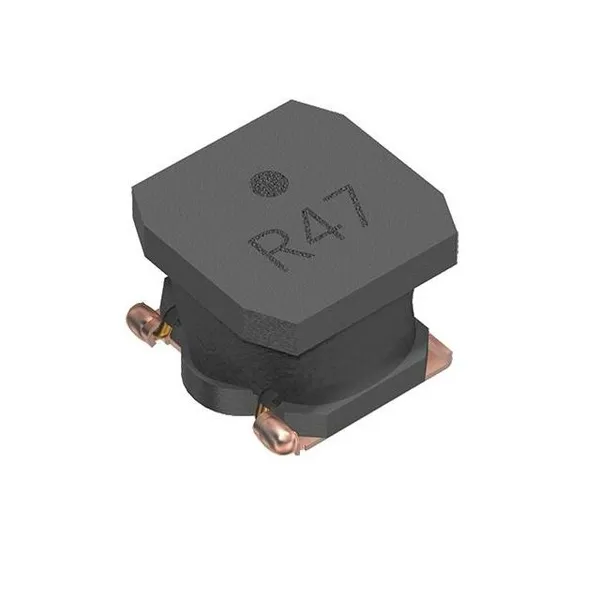
VLS6045EX-2R2N Inductor TDK SMD 6045NegotiableMOQ: 1 Piece
-
DPX165950DT-8160C1 Common Mode Filter TDK SMDNegotiableMOQ: 1 Piece
-
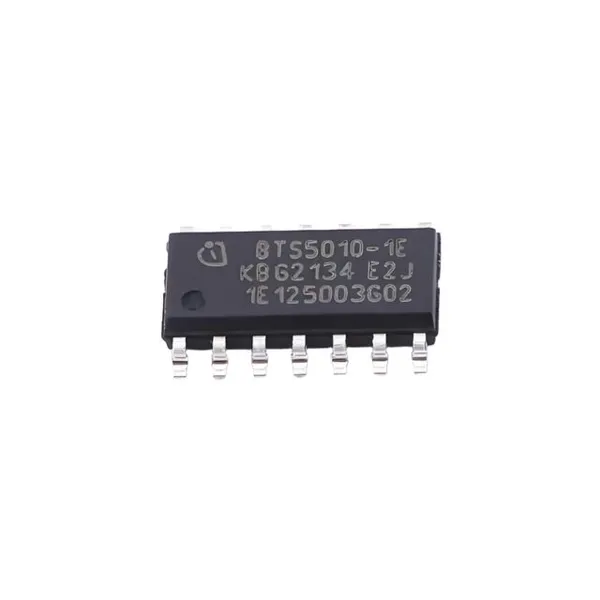
BTS5010-1EKB High-Side Power Switch InfineonNegotiableMOQ: 1 Piece
-
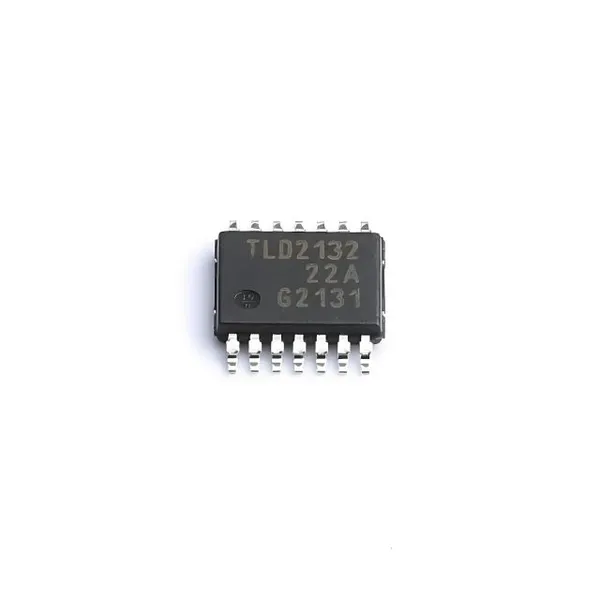
TLD2132-1EP LED Driver IC Infineon PG-DSO-8 (EP)NegotiableMOQ: 1 Piece
-
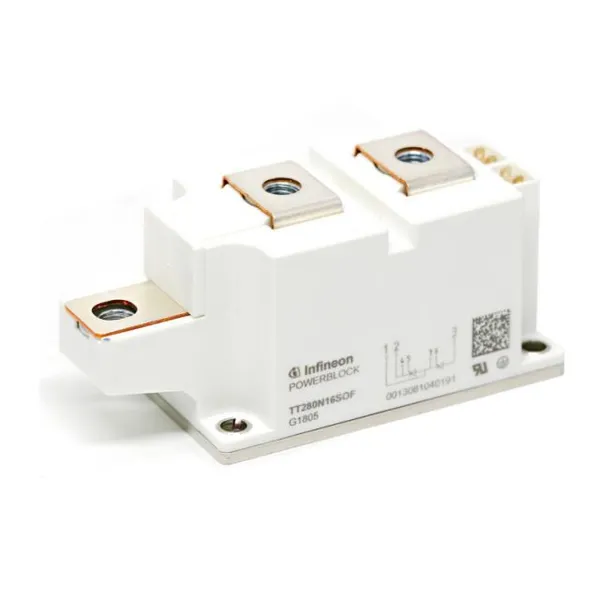
TT280N16SOF Thyristor Module Infineon 50 mm ModuleNegotiableMOQ: 1 Piece
-
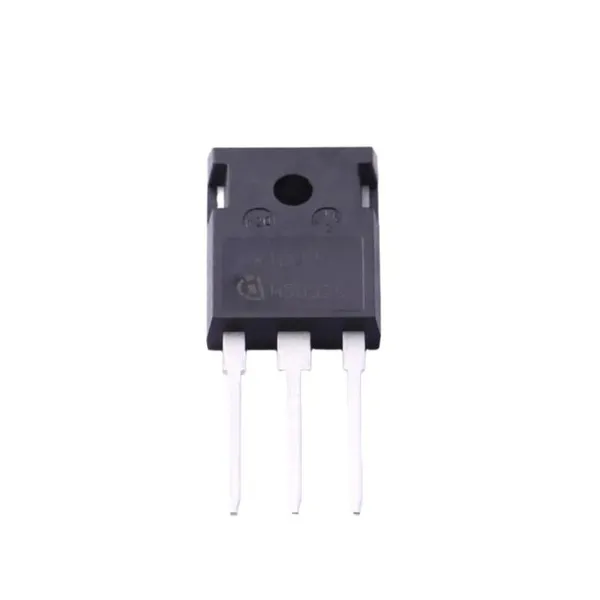
IKW40N65H5 IGBT Infineon TO-247NegotiableMOQ: 1 Piece
-
BTS5030-2EKA High-Side Power Switch Infineon PG-DSO-12NegotiableMOQ: 1 Piece
-
BTS5045-1EJA High-Side Power Switch Infineon PG-TO263-7 (D2PAK)NegotiableMOQ: 1 Piece
-
TLE9564QX Motor System IC Infineon VQFN-48NegotiableMOQ: 1 Piece
-
BTS5200-4EKA High-Side Power Switch Infineon PG-DSO-12NegotiableMOQ: 1 Piece
-
WLC1115-68LQXQ USB Type-C Controller Infineon LQFP-68NegotiableMOQ: 1 Piece