 Business License

eFuse vs Load Switch: Protecting Your Power Rails with TPS259531DSGR and TPS22945DCKR
TPS259531DSGR — 3.5V-23V eFuse with OVP (VSON-10)
Introduction
Power-rail protection is one of those topics that separates designs that survive the field from designs that come back as RMAs. When a downstream fault — short circuit, overvoltage, reverse insertion, inrush current — can take down an entire board, the power path needs a sacrificial, resettable element. Two families dominate this job: eFuses like the TPS259531DSGR and load switches like the TPS22945DCKR. They look similar on a schematic but protect very differently. This guide explains when to use which.
TPS259531DSGR Key Specifications
Type: eFuse (electronic fuse with integrated FET)
Input Range: 3.5 V - 23 V
Continuous Current: up to ~2.5 A class (device dependent)
Protection: overcurrent (cycle-by-cycle + hiccup), overvoltage (OVP with external divider), reverse current/voltage, thermal shutdown
Package: VSON-10
Features: programmable current limit, fault flag output, auto-retry or latch-off modes
TPS22945DCKR Key Specifications
Type: load switch (single P-channel MOSFET + enable logic)
Input Range: 0.8 V - 5.5 V
Continuous Current: ~5 A
On-Resistance: ~65 mΩ typical
Features: controlled turn-on slew rate (inrush limiting), quick output discharge (QOD), thermal shutdown
Package: SOT-23-6 / DCK-6
The Core Difference: Protection vs Control
An eFuse is a protection device. It behaves like a resettable fuse: during normal operation it conducts with low loss, but when the load draws more than the programmed limit, or the input exceeds the OVP threshold, it disconnects — and after a fault clears it can retry automatically. The TPS259531DSGR adds genuine overvoltage protection with an external resistor divider and reverse-voltage blocking, which a simple load switch cannot do.
A load switch is a control device. Its job is clean power sequencing: turn a rail on and off under MCU control, limit inrush current into capacitive loads with a controlled slew rate, and discharge the output quickly when switched off. The TPS22945DCKR does this well, but it does not provide true overcurrent protection — sustained overcurrent simply overheats the pass FET until thermal shutdown trips, and repeated trips can degrade the part.
When to Use an eFuse
1. The rail powers external connectors, hot-swappable modules or user-accessible ports where shorts and reverse insertion are real possibilities.
2. The input bus can see overvoltage transients (automotive load dump, industrial 24 V miswiring) and downstream silicon must be protected.
3. A fault must not take down the whole system — the eFuse isolates the failed branch and keeps the rest alive.
4. You need a fault flag so the MCU can log or annunciate the event.
When to Use a Load Switch
1. The rail needs clean on/off control for power sequencing between subsystems (radio, sensor, display).
2. Inrush current into large decoupling caps or disabled-module inputs must be limited at turn-on.
3. The output must discharge quickly after switch-off to avoid floating inputs.
4. The load is trusted — on the same board, no external fault exposure — so overcurrent protection is a nice-to-have, not a requirement.
Using Both Together
Many production designs use both in series: an eFuse at the board input for fault protection, and per-rail load switches downstream for sequencing and inrush control. The eFuse handles the catastrophic cases; the load switches handle the everyday power management.
Applications
eFuse (TPS259531DSGR class): automotive 12 V/24 V auxiliary rails, hot-swap backplane power, USB and barrel-jack input protection, industrial field-power inputs, battery-powered devices with reverse-polarity exposure. Load switch (TPS22945DCKR class): sensor and radio rail sequencing, SSD and display power gating, USB port power control, any rail that needs soft-start.
Sourcing Notes
When comparing suppliers, confirm the exact device variant (current limit and package options differ within the same family), the date code, and that the parts are original and traceable. Verify the current-limit programming resistor value if your design uses one, and check thermal design guidance in the datasheet for your actual load current. All power-protection parts listed in our store are original, in stock and ready to ship.
Summary
eFuses protect; load switches control. Use the TPS259531DSGR when the rail faces the outside world and faults must be survived; use the TPS22945DCKR when the rail just needs clean on/off and soft-start. For exposed inputs with sequenced downstream rails, use both.
Recently Posted
-
NOR Flash vs NAND Flash: How to Choose the Right SPI Memory for Your Design
November 4, 2026W25N01GVZEIG — 1Gbit SPI NAND Flash (SMD-8)IntroductionSerial flash is the default external memory for embedded systems, but "serial flash" covers two very different technologies: NOR flash and NAND flash. When a design needs to store firmware, a file system, data logs or firmware-update images, choosing the wrong type means either paying too much or running out of reliability headroom. This guide compares NOR and NRead More -
SiC vs Silicon MOSFET: When the AIMBG120R060M1 CoolSiC Makes Sense in 1200V EV Designs
October 26, 2026AIMBG120R060M1 — 1200V 60mΩ SiC MOSFET (TO-247-4)IntroductionSilicon carbide MOSFETs have moved from exotic to mainstream in high-voltage power conversion: EV traction inverters, on-board chargers, industrial motor drives and solar inverters all benefit from SiC's lower switching losses and higher temperature capability. Yet silicon superjunction MOSFETs remain the default in many designs, and engineers keep asking the saRead More -
6-Axis IMU Selection: ICM-42688-P vs BMI270 for Drones, Robots and Wearables
October 26, 2026ICM-42688-P — 6-Axis MEMS IMU (3-axis Gyroscope + 3-axis Accelerometer)IntroductionMotion sensing is the heart of every drone flight controller, self-balancing robot, gimbal and wearable activity tracker. When the design calls for a 6-axis inertial measurement unit — three gyroscope axes plus three accelerometer axes — two part numbers come up in nearly every sourcing conversation: ICM-42688-P from TDK InvenSense and BMI270 fRead More -
GD25Q128ESIGR vs W25Q128JVSIQ: A Pin-Compatible Flash Sourcing Guide
October 24, 2026GD25Q128ESIGR — 128Mbit SPI NOR Flash (SOP-8)IntroductionEvery embedded design that stores firmware, configuration data or a small file system needs one thing: a reliable SPI NOR flash. When the bill of materials calls for 128 Mbit (16 MB) in the classic 8-pin package, two part numbers dominate global sourcing conversations: GD25Q128ESIGR from GigaDevice and W25Q128JVSIQ from Winbond. Engineers regularly ask whether the two aRead More

Contact Us
Recommended Products
-
 SN74LVC1G04DCKR Logic IC TI SOT-23-5NegotiableMOQ: 1 Piece
-
TPS22945DCKR Power Management IC TI SOT-23-5NegotiableMOQ: 1 Piece
-
VLS252012HBX-1R0M-1 Inductor TDK SMD 252012NegotiableMOQ: 1 Piece
-
MLG0603P1N2BT000 Inductor TDK 0603NegotiableMOQ: 1 Piece
-
MLG0603P1N5BT000 Inductor TDK 0603NegotiableMOQ: 1 Piece
-
MLG0603P2N5BT000 Inductor TDK 0603NegotiableMOQ: 1 Piece
-
DEA142450BT-3028A1 Common Mode Filter TDK SMDNegotiableMOQ: 1 Piece
-
DEA165150HT-8025C2 Common Mode Filter TDK SMDNegotiableMOQ: 1 Piece
-
DPX105950DT-6112A2 Common Mode Filter TDK SMDNegotiableMOQ: 1 Piece
-
VLS6045EX-2R2N Inductor TDK SMD 6045NegotiableMOQ: 1 Piece
-
DPX165950DT-8160C1 Common Mode Filter TDK SMDNegotiableMOQ: 1 Piece
-
BTS5010-1EKB High-Side Power Switch InfineonNegotiableMOQ: 1 Piece
-
TLD2132-1EP LED Driver IC Infineon PG-DSO-8 (EP)NegotiableMOQ: 1 Piece
-
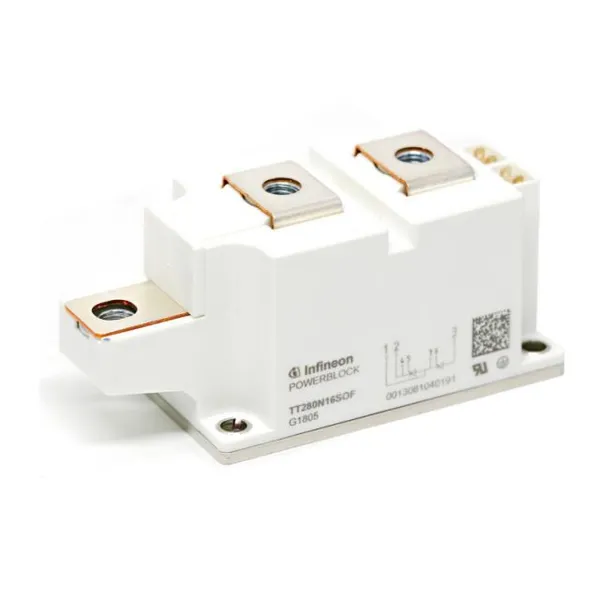
TT280N16SOF Thyristor Module Infineon 50 mm ModuleNegotiableMOQ: 1 Piece
-
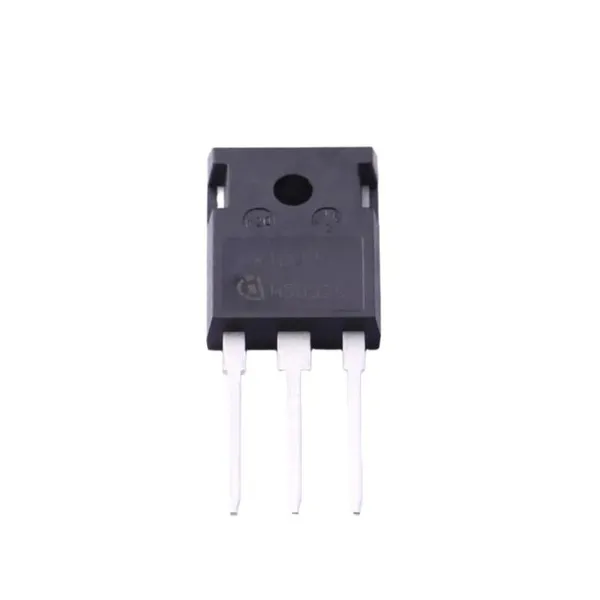
IKW40N65H5 IGBT Infineon TO-247NegotiableMOQ: 1 Piece
-
BTS5030-2EKA High-Side Power Switch Infineon PG-DSO-12NegotiableMOQ: 1 Piece
-
BTS5045-1EJA High-Side Power Switch Infineon PG-TO263-7 (D2PAK)NegotiableMOQ: 1 Piece
-
TLE9564QX Motor System IC Infineon VQFN-48NegotiableMOQ: 1 Piece
-
BTS5200-4EKA High-Side Power Switch Infineon PG-DSO-12NegotiableMOQ: 1 Piece
-
WLC1115-68LQXQ USB Type-C Controller Infineon LQFP-68NegotiableMOQ: 1 Piece