 Business License

AMS1117-3.3 vs Modern LDO Alternatives: When the Classic 1A Regulator Still Wins
AMS1117-3.3 — 1A Fixed 3.3V LDO (SOT-223)
Introduction
The AMS1117-3.3 is one of the most recognizable linear regulators in electronics: a 1 A fixed 3.3 V LDO in a SOT-223 package, found on countless development boards, sensor modules and industrial controllers. Every year, newer LDOs arrive with better specs on paper — lower quiescent current, higher PSRR, smaller packages. So the question comes up constantly: is the AMS1117-3.3 still the right choice, or is it time to move on? The honest answer: for most designs, the classic part still wins.
AMS1117-3.3 Key Specifications
Output: Fixed 3.3 V
Output Current: 1 A (peak)
Dropout Voltage: ~1.3 V at 1 A
Input Range: up to 15 V (typically 5 V or 3.6 V rails in practice)
Package: SOT-223
Temperature: -40°C to +125°C (junction)
Protection: internal current limiting and thermal shutdown
What Modern LDOs Offer
Contemporary LDOs improve on three axes:
1. Quiescent current — modern parts draw microamps instead of the AMS1117's ~10 mA ground current, which matters enormously for battery-powered and always-on sensing nodes.
2. PSRR and noise — newer designs reject supply ripple better, helping sensitive RF and ADC circuits.
3. Package size — modern parts fit in tiny DFN/WLCSP packages where a SOT-223 tab would never fit.
None of these advantages matter if your design is mains- or USB-powered, space is not critical, and thermal design follows the datasheet.
When the AMS1117-3.3 Still Wins
1. Cost — at high volume the AMS1117-3.3 remains one of the cheapest ways to get a regulated 3.3 V rail, often a fraction of the price of precision modern LDOs.
2. Availability — every distributor on earth stocks it, in every package variant, with short lead times. For production continuity this is hard to beat.
3. Thermal simplicity — the SOT-223 tab gives a large copper area to sink heat. A 5 V input at 1 A dissipates only ~1.7 W, well within a reasonable copper pour.
4. Ecosystem — reference designs, evaluation boards and app notes assume the AMS1117 pinout; drop-in replacement is genuinely drop-in.
5. Robustness — the part tolerates input transients and reversed-ish hookups far better than precision LDOs, which suits industrial field wiring.
When to Choose a Modern Alternative
Switch to a modern LDO when your design is battery-powered (quiescent current dominates budget), when you need high PSRR for RF or precision analog, when board space forces a sub-3 mm package, or when your input-to-output differential is small (modern LDOs reach 100-200 mV dropout where the AMS1117 needs over a volt).
Applications
The AMS1117-3.3 is the standard 3.3 V rail source in: Arduino-compatible and STM32 development boards, ESP8266/ESP32 modules, sensor interfaces (temperature, humidity, pressure), RS-485 and CAN transceiver supplies, EEPROM and flash pull-ups, LCD and OLED display bias, and general post-regulation behind a 5 V DC/DC converter.
Sourcing Notes
The AMS1117-3.3 is produced by multiple manufacturers (Advanced Monolithic Systems, many second sources). Confirm the actual brand on the label, the date code, and that the part is original and traceable. For SMT production, check the packing (tape & reel vs tube) and the marking format (AMS1117-3.3 vs 1117-33). All regulators listed in our store are original, in stock and ready to ship.
Summary
The AMS1117-3.3 is old, not obsolete. For cost-driven, space-tolerant, non-battery designs it remains the pragmatic default — unbeatable price, universal availability and a thermal profile that just works. Save modern LDOs for the designs that genuinely need microamp quiescent current, tiny footprints or ultra-low dropout.
Recently Posted
-
eFuse vs Load Switch: Protecting Your Power Rails with TPS259531DSGR and TPS22945DCKR
November 4, 2026TPS259531DSGR — 3.5V-23V eFuse with OVP (VSON-10)IntroductionPower-rail protection is one of those topics that separates designs that survive the field from designs that come back as RMAs. When a downstream fault — short circuit, overvoltage, reverse insertion, inrush current — can take down an entire board, the power path needs a sacrificial, resettable element. Two families dominate this job: eFuses like the TPS259531DSGR aRead More -
NOR Flash vs NAND Flash: How to Choose the Right SPI Memory for Your Design
November 4, 2026W25N01GVZEIG — 1Gbit SPI NAND Flash (SMD-8)IntroductionSerial flash is the default external memory for embedded systems, but "serial flash" covers two very different technologies: NOR flash and NAND flash. When a design needs to store firmware, a file system, data logs or firmware-update images, choosing the wrong type means either paying too much or running out of reliability headroom. This guide compares NOR and NRead More -
SiC vs Silicon MOSFET: When the AIMBG120R060M1 CoolSiC Makes Sense in 1200V EV Designs
October 26, 2026AIMBG120R060M1 — 1200V 60mΩ SiC MOSFET (TO-247-4)IntroductionSilicon carbide MOSFETs have moved from exotic to mainstream in high-voltage power conversion: EV traction inverters, on-board chargers, industrial motor drives and solar inverters all benefit from SiC's lower switching losses and higher temperature capability. Yet silicon superjunction MOSFETs remain the default in many designs, and engineers keep asking the saRead More -
6-Axis IMU Selection: ICM-42688-P vs BMI270 for Drones, Robots and Wearables
October 26, 2026ICM-42688-P — 6-Axis MEMS IMU (3-axis Gyroscope + 3-axis Accelerometer)IntroductionMotion sensing is the heart of every drone flight controller, self-balancing robot, gimbal and wearable activity tracker. When the design calls for a 6-axis inertial measurement unit — three gyroscope axes plus three accelerometer axes — two part numbers come up in nearly every sourcing conversation: ICM-42688-P from TDK InvenSense and BMI270 fRead More

Contact Us
Recommended Products
-
 SN74LVC1G04DCKR Logic IC TI SOT-23-5NegotiableMOQ: 1 Piece
-
TPS22945DCKR Power Management IC TI SOT-23-5NegotiableMOQ: 1 Piece
-
VLS252012HBX-1R0M-1 Inductor TDK SMD 252012NegotiableMOQ: 1 Piece
-
MLG0603P1N2BT000 Inductor TDK 0603NegotiableMOQ: 1 Piece
-
MLG0603P1N5BT000 Inductor TDK 0603NegotiableMOQ: 1 Piece
-
MLG0603P2N5BT000 Inductor TDK 0603NegotiableMOQ: 1 Piece
-
DEA142450BT-3028A1 Common Mode Filter TDK SMDNegotiableMOQ: 1 Piece
-
DEA165150HT-8025C2 Common Mode Filter TDK SMDNegotiableMOQ: 1 Piece
-
DPX105950DT-6112A2 Common Mode Filter TDK SMDNegotiableMOQ: 1 Piece
-
VLS6045EX-2R2N Inductor TDK SMD 6045NegotiableMOQ: 1 Piece
-
DPX165950DT-8160C1 Common Mode Filter TDK SMDNegotiableMOQ: 1 Piece
-
BTS5010-1EKB High-Side Power Switch InfineonNegotiableMOQ: 1 Piece
-
TLD2132-1EP LED Driver IC Infineon PG-DSO-8 (EP)NegotiableMOQ: 1 Piece
-
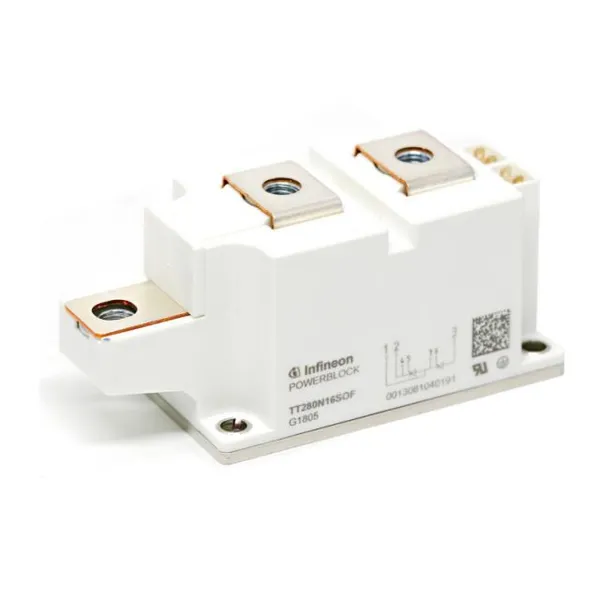
TT280N16SOF Thyristor Module Infineon 50 mm ModuleNegotiableMOQ: 1 Piece
-
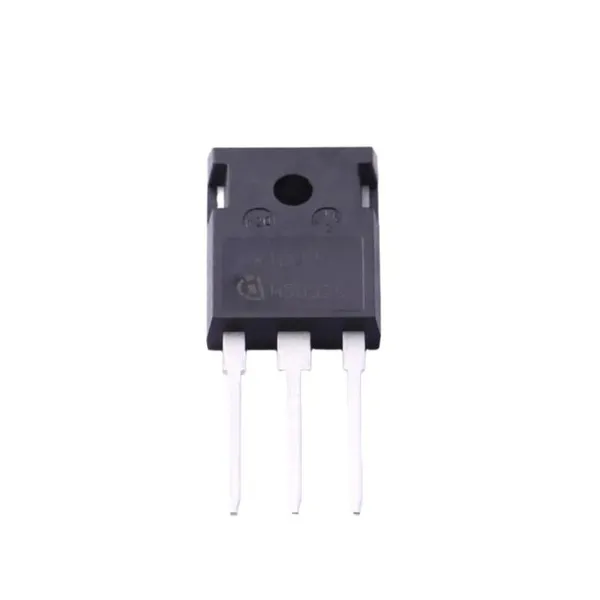
IKW40N65H5 IGBT Infineon TO-247NegotiableMOQ: 1 Piece
-
BTS5030-2EKA High-Side Power Switch Infineon PG-DSO-12NegotiableMOQ: 1 Piece
-
BTS5045-1EJA High-Side Power Switch Infineon PG-TO263-7 (D2PAK)NegotiableMOQ: 1 Piece
-
TLE9564QX Motor System IC Infineon VQFN-48NegotiableMOQ: 1 Piece
-
BTS5200-4EKA High-Side Power Switch Infineon PG-DSO-12NegotiableMOQ: 1 Piece
-
WLC1115-68LQXQ USB Type-C Controller Infineon LQFP-68NegotiableMOQ: 1 Piece