 Business License

Infineon OptiMOS vs CoolMOS: Choosing the Right MOSFET Voltage Class from 60V to 650V
IPP80N06S2-07 — 60V 80A OptiMOS N-Channel MOSFET (TO-220)
Introduction
Infineon dominates discrete power MOSFET sourcing, and the two brand families engineers meet most often are OptiMOS and CoolMOS. They are not competitors for the same socket — they are engineered for different voltage classes and different loss mechanisms. Choosing the wrong family means either paying for silicon you do not need or cooking a part that cannot handle the job. This guide maps the 60 V to 650 V range and shows which family belongs where.
Two Families, Two Missions
OptiMOS is the low-voltage, switching-optimized family. Parts like the IPP80N06S2-07 (60 V, ~80 A, TO-220) and IPP048N12N3G (120 V class) are designed for minimum on-resistance and gate charge at voltages up to about 150 V. The target applications are DC/DC converters, motor drives, battery management, load switches and OR-ing circuits — anywhere a low-side or high-side switch works hard at tens of amps.
CoolMOS is the superjunction family for high-voltage, energy-efficient switching. Parts like the IPI65R380C6 (600 V class) and IPL60R125C7 (650 V class) exploit charge compensation to slash the on-resistance that conventional high-voltage MOSFETs suffer. The target applications are mains-connected converters: PFC stages, adapters, LED drivers and industrial power supplies.
Why the Voltage Boundary Sits Around 150-200 V
Below roughly 150 V, the OptiMOS cell structure wins: RDS(on) per unit area improves as voltage rating drops, and low gate charge keeps switching losses low. Above roughly 500-600 V, conventional planar MOSFETs would need enormous die area to reach useful on-resistance — the superjunction principle in CoolMOS breaks that trade-off by adding deep p-n columns that let the drift region be much more heavily doped.
The consequence: do not specify a CoolMOS part in a 60 V buck converter (you pay for voltage you will never use), and never put a 60 V OptiMOS part on a 400 V bus (it will avalanche and die).
Voltage-Class Selection Guide
1. 12-100 V (OptiMOS) — DC/DC buck/boost, motor control, battery protection. Reference: IPP80N06S2-07 (60 V). Check current rating against conduction losses and SOA against switching energy.
2. 100-200 V (OptiMOS high end) — 48 V industrial buses, hot-swap, synchronous rectification at higher voltage. Reference: IPP048N12N3G (120 V).
3. 400-600 V (CoolMOS P6/P7 class) — PFC and LLC in adapters and chargers. Reference: IPI65R380C6 (600 V).
4. 600-650 V (CoolMOS highest) — 400 V PFC output rails, industrial PSU front ends. Reference: IPL60R125C7 (650 V).
Loss Budget Thinking
For low-voltage OptiMOS parts, conduction loss (I²R) usually dominates — prioritize RDS(on) at your actual operating temperature. For high-voltage CoolMOS parts, switching loss often dominates — prioritize gate charge (Qg), output capacitance (Eoss) and body-diode recovery (Qrr). The same datasheet number means different things in the two families, which is why they are not interchangeable.
Applications
OptiMOS: server and telecom DC/DC, e-bike and power-tool motor drives, USB-C power path and load switches, battery protection FETs, synchronous rectification. CoolMOS: TV and adapter standby and PFC, LED drivers, industrial SMPS, consumer chargers, UPS front-end conversion.
Sourcing Notes
Confirm the exact ordering code — Infineon suffixes encode generation (P6, P7), package and gate charge, and cross-family lookalikes are not drop-in. Verify the date code and that parts are original and traceable. For production, check packing (tape & reel vs tube) and MSL rating. All MOSFETs listed in our store are original, in stock and ready to ship.
Summary
OptiMOS owns the low-voltage, conduction-loss-driven world up to ~150 V; CoolMOS owns the high-voltage, switching-loss-driven world from 400 V to 650 V. Match the family to your bus voltage first, then optimize the specific part for your loss budget.
Recently Posted
-
IRFB4110PBF: Why This 100V TO-220 MOSFET Remains an Industry Standard for High-Current Switching
November 16, 2026IRFB4110PBF — 100V 180A N-Channel MOSFET (TO-220)IntroductionSome part numbers become industry standards not because they are the newest silicon, but because they hit the sweet spot of price, performance and availability so precisely that generations of designs keep specifying them. The IRFB4110PBF — International Rectifier's 100 V, 180 A N-channel MOSFET in a TO-220 package — is one of those parts. Two decades after intrRead More -
USB Type-C PD Controller Selection: CYPD7271-68LQXQ vs WLC1115-68LQXQ for Chargers and Docks
November 9, 2026CYPD7271-68LQXQ — USB-C Power Delivery 3.0 Controller (68-QFN)IntroductionUSB Type-C has replaced barrel jacks and micro-USB across consumer and industrial electronics, and with it comes the requirement to negotiate power correctly: sink or source, how many volts, how many amps. Every compliant design needs a USB Power Delivery controller. Two Infineon (Cypress) parts come up in sourcing discussions for chargers and docks: thRead More -
eFuse vs Load Switch: Protecting Your Power Rails with TPS259531DSGR and TPS22945DCKR
November 4, 2026TPS259531DSGR — 3.5V-23V eFuse with OVP (VSON-10)IntroductionPower-rail protection is one of those topics that separates designs that survive the field from designs that come back as RMAs. When a downstream fault — short circuit, overvoltage, reverse insertion, inrush current — can take down an entire board, the power path needs a sacrificial, resettable element. Two families dominate this job: eFuses like the TPS259531DSGR aRead More -
NOR Flash vs NAND Flash: How to Choose the Right SPI Memory for Your Design
November 4, 2026W25N01GVZEIG — 1Gbit SPI NAND Flash (SMD-8)IntroductionSerial flash is the default external memory for embedded systems, but "serial flash" covers two very different technologies: NOR flash and NAND flash. When a design needs to store firmware, a file system, data logs or firmware-update images, choosing the wrong type means either paying too much or running out of reliability headroom. This guide compares NOR and NRead More

Contact Us
Recommended Products
-
 SN74LVC1G04DCKR Logic IC TI SOT-23-5NegotiableMOQ: 1 Piece
-
TPS22945DCKR Power Management IC TI SOT-23-5NegotiableMOQ: 1 Piece
-
VLS252012HBX-1R0M-1 Inductor TDK SMD 252012NegotiableMOQ: 1 Piece
-
MLG0603P1N2BT000 Inductor TDK 0603NegotiableMOQ: 1 Piece
-
MLG0603P1N5BT000 Inductor TDK 0603NegotiableMOQ: 1 Piece
-
MLG0603P2N5BT000 Inductor TDK 0603NegotiableMOQ: 1 Piece
-
DEA142450BT-3028A1 Common Mode Filter TDK SMDNegotiableMOQ: 1 Piece
-
DEA165150HT-8025C2 Common Mode Filter TDK SMDNegotiableMOQ: 1 Piece
-
DPX105950DT-6112A2 Common Mode Filter TDK SMDNegotiableMOQ: 1 Piece
-
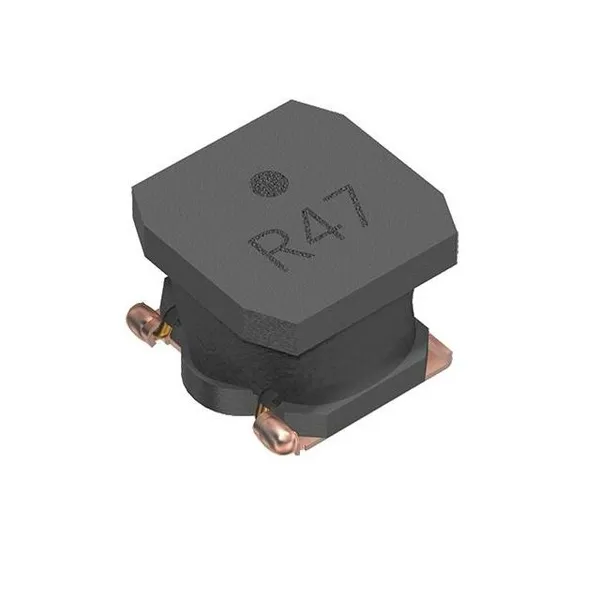
VLS6045EX-2R2N Inductor TDK SMD 6045NegotiableMOQ: 1 Piece
-
DPX165950DT-8160C1 Common Mode Filter TDK SMDNegotiableMOQ: 1 Piece
-
BTS5010-1EKB High-Side Power Switch InfineonNegotiableMOQ: 1 Piece
-
TLD2132-1EP LED Driver IC Infineon PG-DSO-8 (EP)NegotiableMOQ: 1 Piece
-
TT280N16SOF Thyristor Module Infineon 50 mm ModuleNegotiableMOQ: 1 Piece
-
IKW40N65H5 IGBT Infineon TO-247NegotiableMOQ: 1 Piece
-
BTS5030-2EKA High-Side Power Switch Infineon PG-DSO-12NegotiableMOQ: 1 Piece
-
BTS5045-1EJA High-Side Power Switch Infineon PG-TO263-7 (D2PAK)NegotiableMOQ: 1 Piece
-
TLE9564QX Motor System IC Infineon VQFN-48NegotiableMOQ: 1 Piece
-
BTS5200-4EKA High-Side Power Switch Infineon PG-DSO-12NegotiableMOQ: 1 Piece
-
WLC1115-68LQXQ USB Type-C Controller Infineon LQFP-68NegotiableMOQ: 1 Piece